06
Supply Chain Management · Aerospace
2026Airbus A320 Supply Chain Strategy & Resilience
An end-to-end case study of the Airbus A320 supply network, from multi-tier sourcing and global assembly flows to strategic fit, supplier dependency and resilience governance.
Role
Team member · Network mapping, strategic fit and supply-risk analysis
Context
Group 2, seven-person team · Politecnico di Milano
Methods
Supply Chain Mapping · Strategic Fit · JIT · Supplier Risk · Resilience · Sustainable Procurement
The challenge
Airbus must coordinate thousands of suppliers, large modules, four final-assembly locations and time-critical JIT flows while managing single-source dependencies, ramp-up pressure, geopolitical exposure and sustainability requirements.
The approach
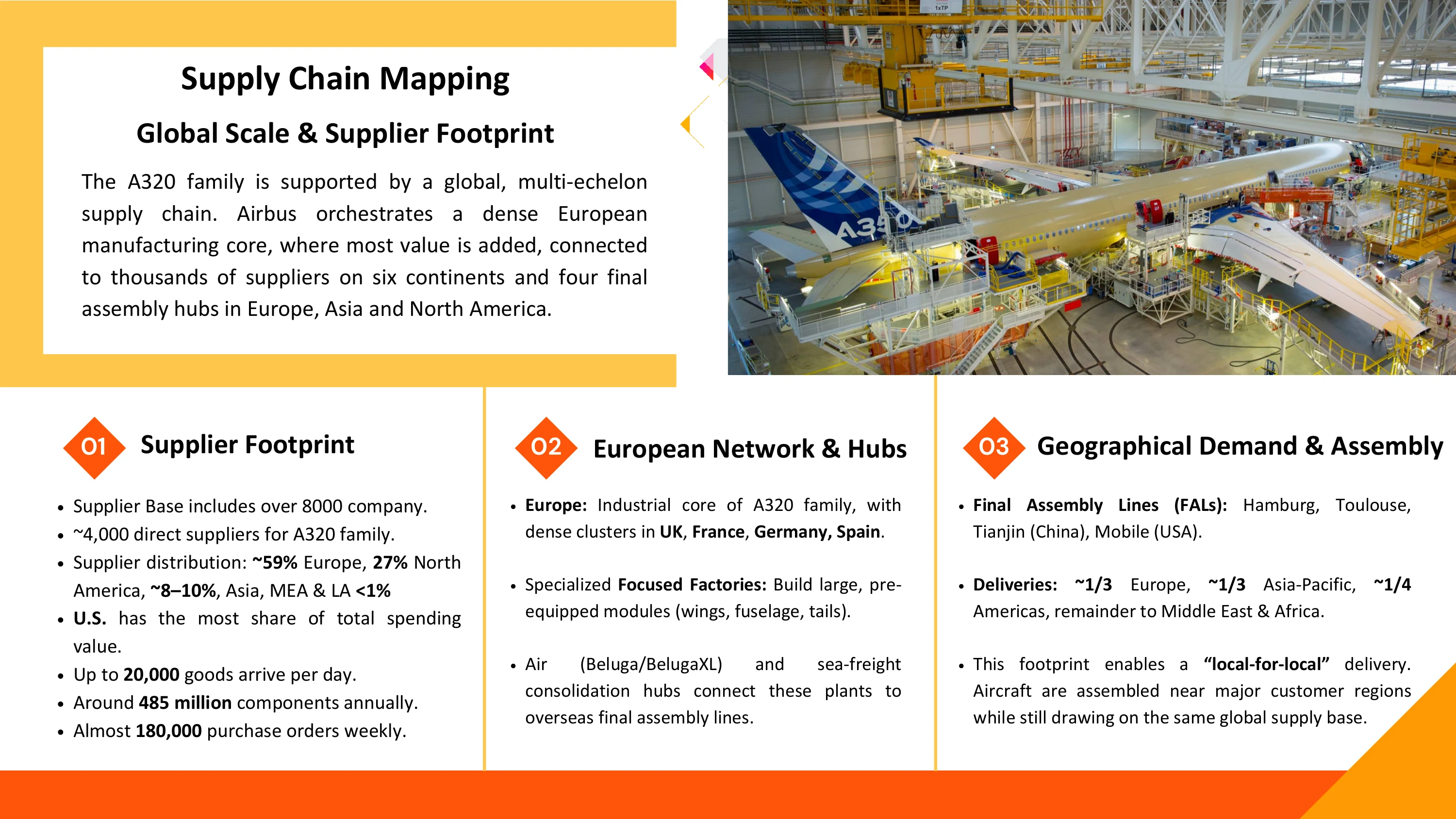
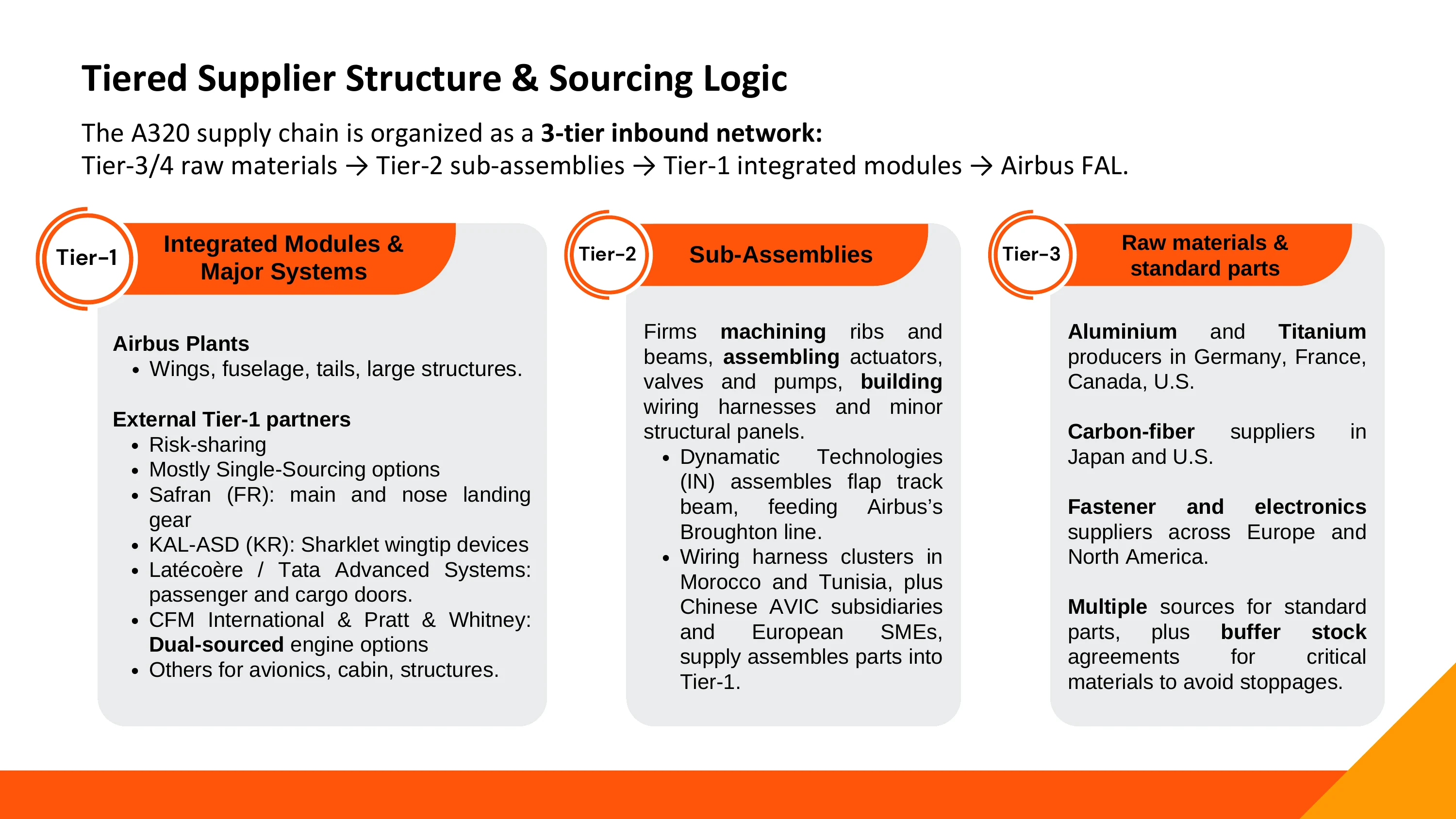
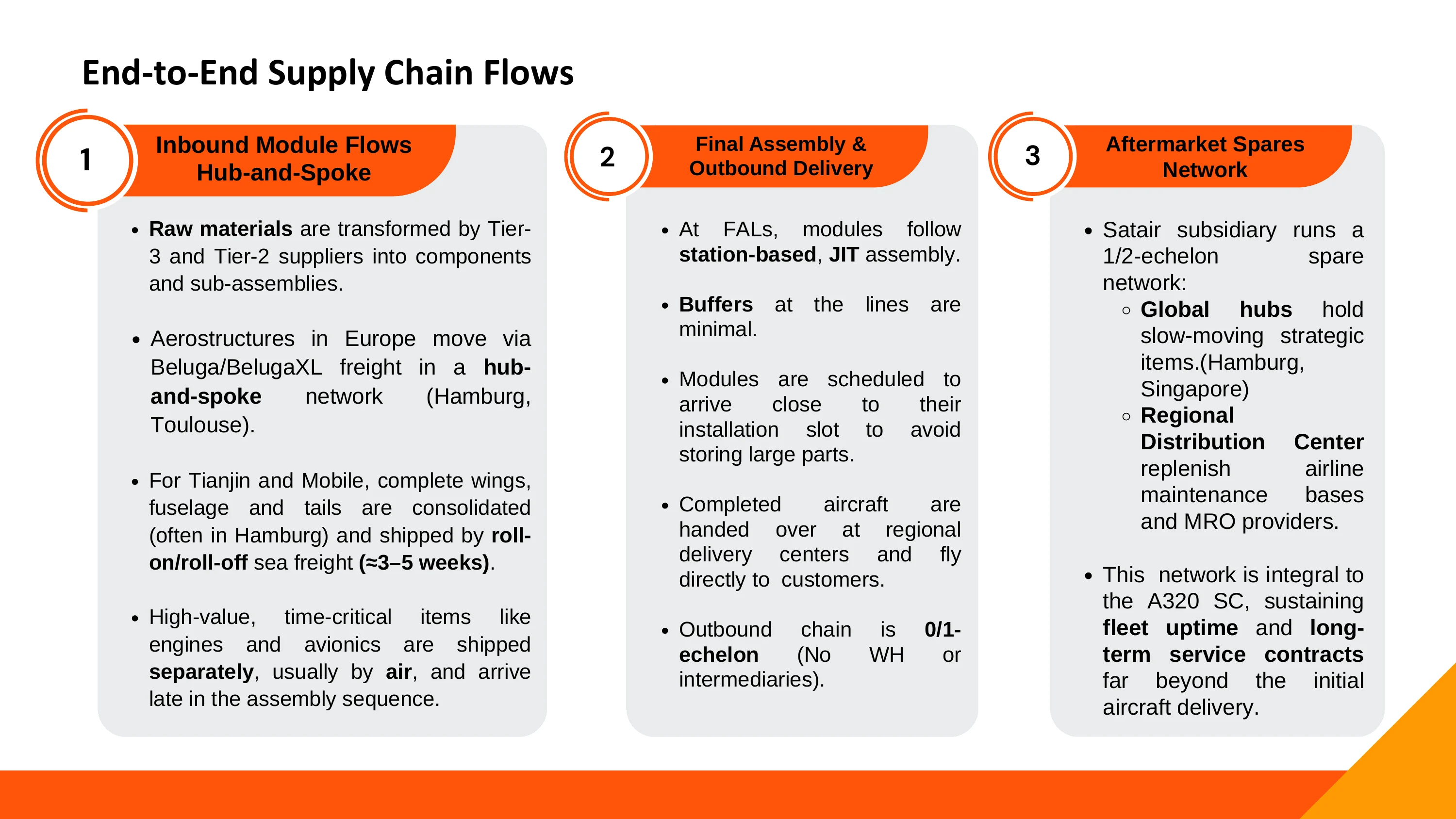
- Mapped the global supplier footprint, three-tier inbound structure, focused factories, consolidation hubs, final assembly lines and aftermarket network.
- Applied Fisher's demand framework and Hau Lee's supply-uncertainty model to test the fit between product characteristics and supply-chain strategy.
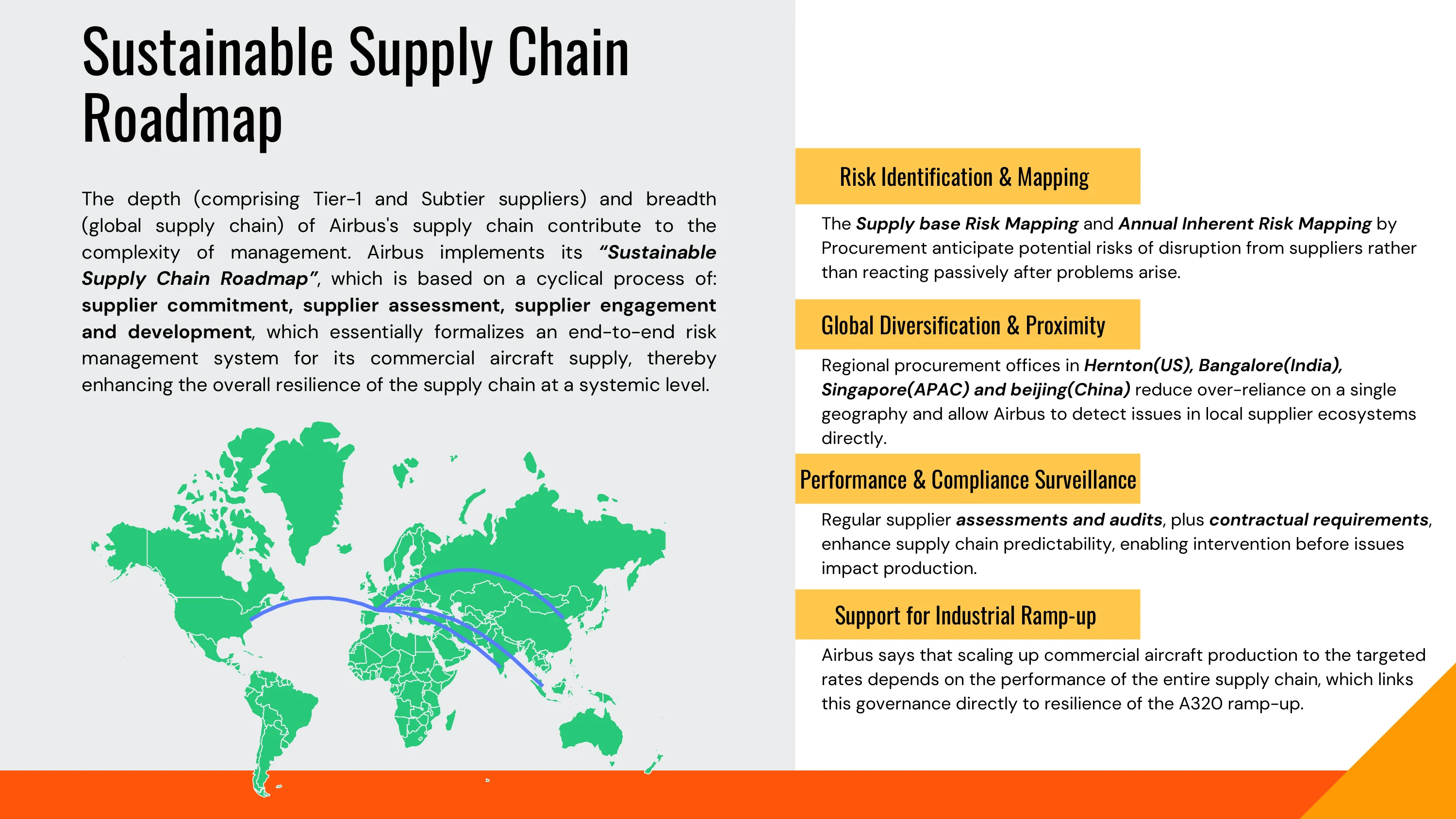
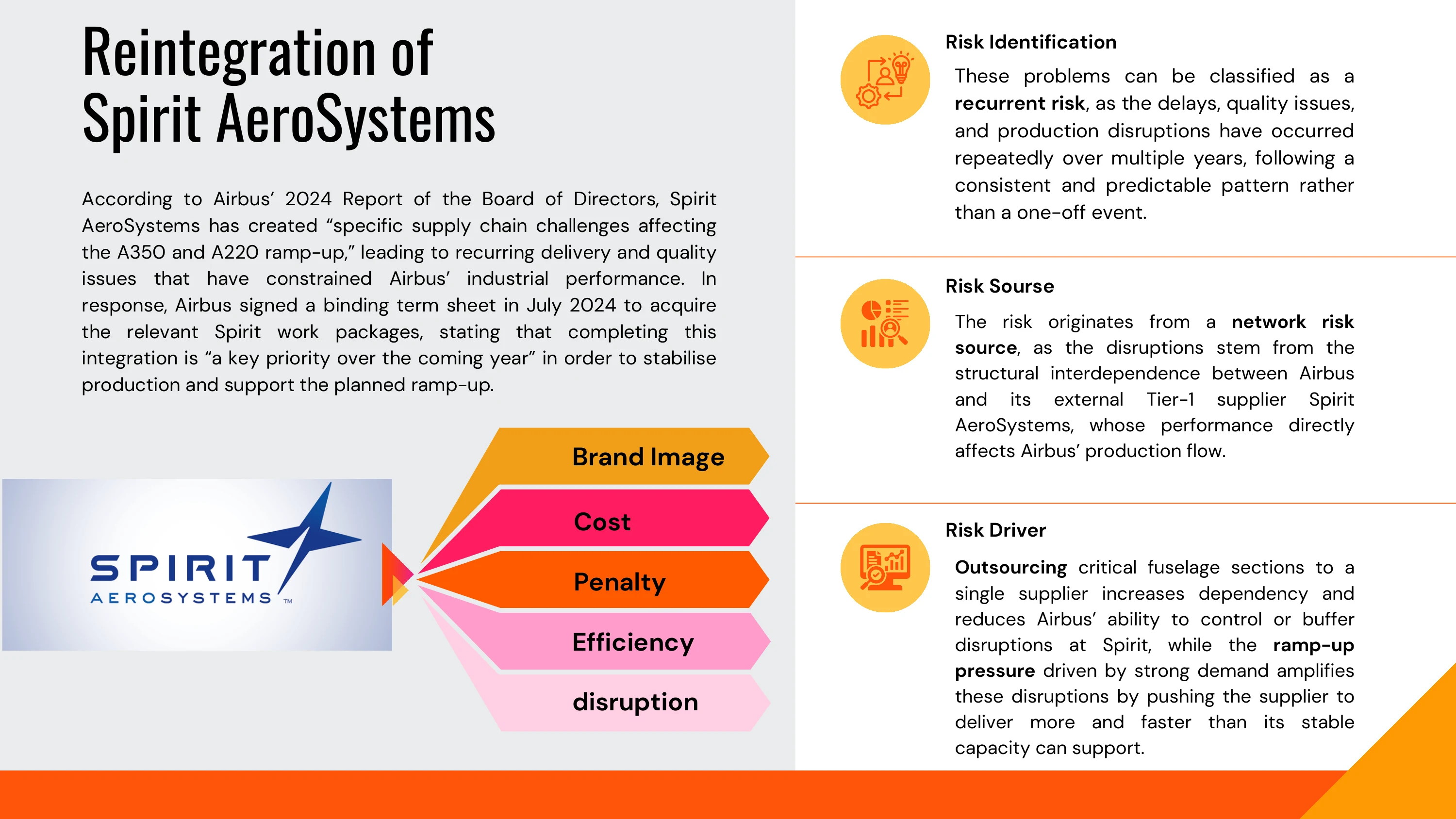
- Analyzed recurrent network risk through the Spirit AeroSystems case, then connected risk mapping, diversification, supplier surveillance and industrial ramp-up into a resilience roadmap.
8,000+companies in supplier base
4global final assembly hubs
20,000goods arriving per day
3-tierinbound sourcing structure
Outcome
The analysis characterizes the A320 network as demand-stable but supply-evolving, making risk hedging more appropriate than a purely efficient chain. It links operational architecture to concrete resilience levers: visibility beyond Tier 1, selective buffers, dual sourcing, regional proximity and tighter supplier development.